Buyers Guide to Load Rated Floor Tiles for Commercial Projects
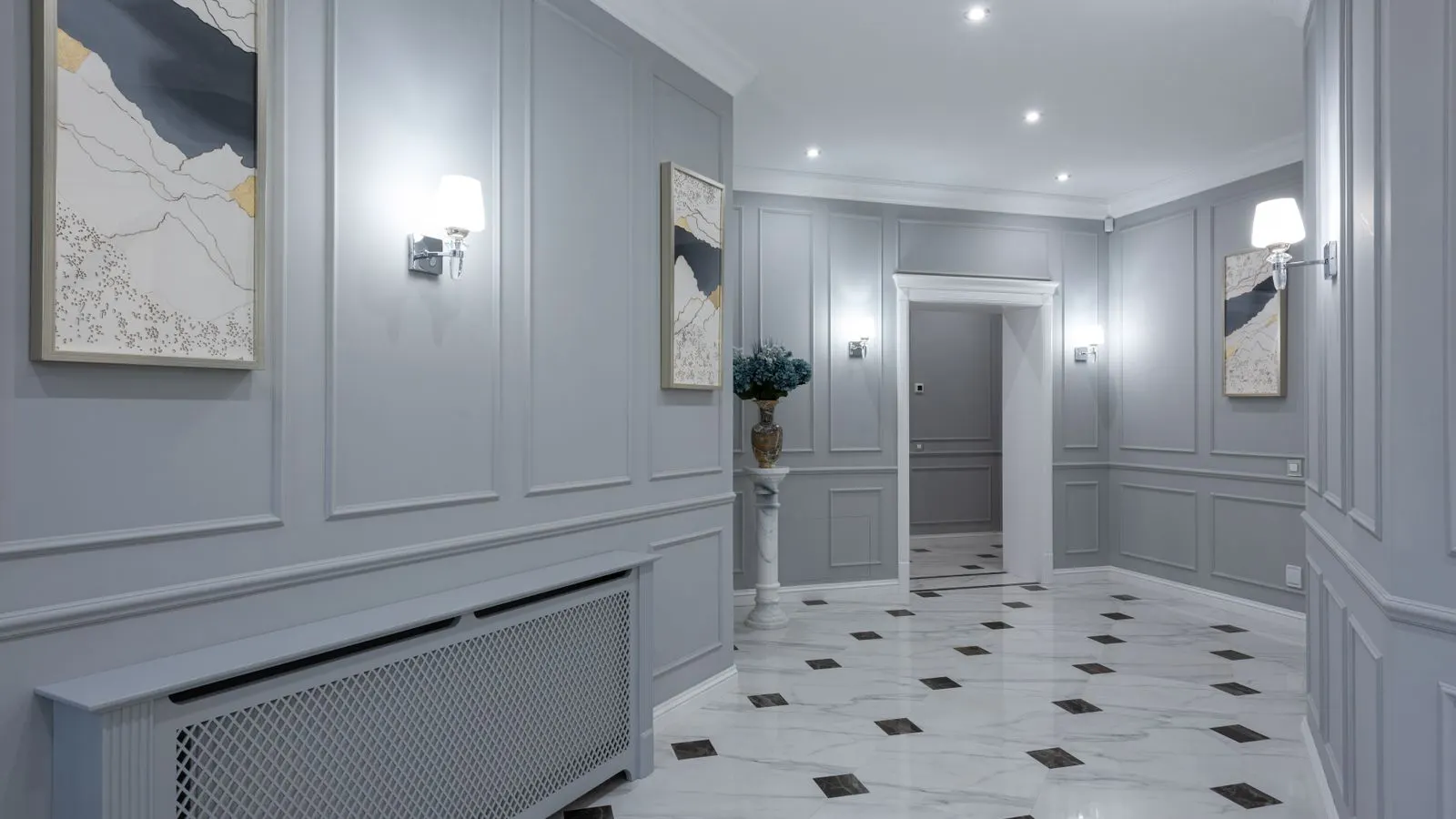
To choose the right commercial floor tile, match the manufacturer's load rating to the expected foot traffic, furniture weight, and structural capacity of the building. Review independent test reports for flexural and compressive strength, verify the substrate preparation, and confirm the slip resistance rating for the intended environment to prevent premature failure and liability issues.
- Match tile strength classes to specific traffic loads, not just aesthetic preferences.
- Verify independent third-party test reports for flexural and compressive strength values.
- Account for substrate quality and installation method when calculating total load capacity.
- Select slip resistance ratings based on the specific usage scenario, such as wet or dry.
- Document all specifications and test results for warranty and liability protection.
Understanding Load Ratings in Commercial Environments
Commercial spaces demand floor tiles that withstand continuous, high-volume traffic. Unlike residential settings, these areas face heavy furniture, rolling equipment, and thousands of footfalls daily. The term load rated floor tiles refers to products tested to specific mechanical thresholds, ensuring they do not crack, chip, or deform under expected forces.
There is no single universal standard that defines a “load rating” across all regions and manufacturers. Instead, the rating is a combination of flexural strength, compressive strength, and sometimes specific impact or abrasion data. A tile might pass a flexural test easily but fail under concentrated point loads if the substrate is weak. Professional buyers must look beyond marketing labels and examine the technical data sheets provided by manufacturers.
The primary metric here is flexural strength, often measured in Megapascals (MPa). This value indicates how much bending stress the tile can handle before fracturing. For high-traffic commercial zones, such as airports or shopping malls, higher values are typical. However, a high flexural number does not automatically guarantee durability if the installation method is flawed. The tile must work in concert with the adhesive, the substrate, and the movement joints.
Defining Traffic Intensity and Load Classes
Before selecting a specific product, define the load class of the project site. This classification separates residential, light commercial, heavy commercial, and industrial uses. A small boutique might require a mid-range product, while a public transit hub requires top-tier performance.
Traffic intensity is not just about the number of people. It includes the weight distribution of the movement. A person walking creates a distributed load. A trolley, a service cart, or a heavy piece of office furniture creates a concentrated point load. These point loads are often more damaging than the sheer volume of foot traffic.
When specifying load rated floor tiles, consider the following zones:
- Lobbies and Reception Areas: High visual impact, moderate to high traffic, frequent cleaning.
- Corridors and Hallways: Constant linear movement, exposure to rolling equipment.
- Restrooms and Kitchens: Wet environments, high abrasion, potential for chemical exposure.
- Warehouses and Loading Bays: Heavy machinery, dynamic impacts, extreme durability required.
Misclassifying the traffic intensity is a common error. Specifying a tile for a “light” commercial use in a space that actually functions as a heavy commercial hub leads to early failure. The tile may look fine for the first few months, but micro-cracks will develop at the edges, leading to water ingress and eventual spalling.
The Criteria for Selection
Selecting the right tile requires comparing technical specifications against project requirements. The table below outlines the key criteria to evaluate during the procurement process.
| Criterion | What to look for | Why it matters |
|---|---|---|
| Flexural Strength | Manufacturer test data in MPa; higher is generally better for heavy traffic | Indicates resistance to bending and cracking under weight |
| Compressive Strength | Values in MPa or N/mm²; should be high for point loads | Determines how well the tile handles concentrated pressure from furniture or equipment |
| Slip Resistance | R-value or P-value (COF) based on the specific environment | Prevents accidents in wet or oily conditions, reducing liability |
| Surface Finish | Matte, honed, or textured; avoid high gloss in high-traffic wet zones | Affects slip resistance, maintenance, and visual appearance of wear |
| Substrate Compatibility | Tile must be compatible with the specific adhesive and base material | Ensures proper bond strength and movement accommodation |
| Thickness | Generally 8mm to 12mm+ for commercial use; thicker is more rigid | Thicker tiles resist deflection better, especially over larger panel sizes |
When reviewing these criteria, pay close attention to the testing method. Some manufacturers test small samples in a laboratory. Others test full panels. Full panel testing is more representative of real-world installation, where the tile is bonded to a substrate and spans a certain distance. Ask for the test report, not just the printed value on the box.
Slip Resistance and Safety
In commercial settings, slip resistance is a legal and safety requirement. A tile with excellent load rating but poor slip resistance is a liability waiting to happen. The relevant metric is the Coefficient of Friction (COF) or the R-value (R9 to R10 for most commercial areas, R11 to R13 for wet or outdoor areas).
Slip resistance is not static. It changes based on surface wear, the presence of water, oil, or cleaning agents, and the type of footwear. A new tile might have a high R-value, but after six months of cleaning with alkaline detergents, the surface profile may change.
When selecting load rated floor tiles for wet commercial areas, such as food service or restrooms, prioritize textured or matte finishes. Glossy surfaces, while aesthetically pleasing, become extremely slippery when wet. For dry high-traffic corridors, a low-sheen matte finish offers a balance between slip resistance and ease of cleaning.
It is also worth considering the grout. In high-traffic areas, grout lines can wear down or become discolored. Using a slip-resistant grout or a larger joint width can help maintain the surface profile and reduce the risk of trip hazards.
Installation and Substrate Considerations
The best load rated floor tiles will fail if installed on a poor substrate. The structural integrity of the floor depends on the entire assembly: the concrete slab, the screed, the adhesive, and the tile.
Deflection is a critical factor. If the substrate flexes under load, the tile will crack. For large format tiles, the span between support points must be minimized. This often requires a denser support structure or a stiffer screed mixture.
Adhesive selection is equally important. Use a flexible, high-performance cementitious adhesive suitable for the tile’s suction rate and the substrate. In commercial projects, open-bed application is often required for larger tiles to ensure full coverage and prevent hollow spots. Hollow spots are weak points where the tile can separate from the substrate and crack under point loads.
Movement joints are another often-overlooked element. As buildings settle and experience temperature changes, the floor moves. Without proper isolation joints, this movement transfers to the tile, causing cracking. Design the joint layout based on the room dimensions and the tile size. For very large panels, the joint spacing may need to be tighter than what is typical for smaller tiles.
Documentation and Warranty
Procurement is as much about documentation as it is about the physical product. Ensure that the contract specifies the exact technical data sheet version, the batch number, and the test report. This protects you if there is a dispute over performance.
Warranties for commercial tiles often cover manufacturing defects but not installation errors or misuse. A claim for a cracked tile in a high-traffic area will be scrutinized. If the documentation shows that the tile was not installed according to the manufacturer’s guidelines, or if the substrate was not prepared correctly, the warranty may be void.
Keep a sample of the tile and the adhesive on site. This allows you to match future batches or repair damaged areas. Color variation is natural in ceramic and porcelain, but having a reference sample ensures any replacement tile blends in.
Final Decision Checklist
Before placing the order, run through this checklist to confirm the selection is appropriate for the project.
- Verify Traffic Class: Confirm the expected load intensity and point loads for the specific space.
- Check Technical Data: Review flexural, compressive, and slip resistance values from independent test reports.
- Assess Substrate: Ensure the existing floor structure can support the tile’s weight and the adhesive’s requirements.
- Select Finish: Choose a surface finish that balances slip resistance, durability, and maintenance needs.
- Plan Joints: Design the movement joint layout to accommodate structural movement.
- Confirm Documentation: Ensure the contract includes the specific test reports and installation guidelines.
- Conduct Trial Installation: Install a small sample area to check fit, finish, and bond strength before full rollout.
By following this structured approach, buyers can select load rated floor tiles that perform reliably over the life of the commercial project. The focus should always be on the total system, not just the tile itself. A well-specified, correctly installed tile system provides safety, durability, and long-term value.
Frequently asked questions
What is the difference between flexural strength and compressive strength for floor tiles?
Flexural strength measures how much bending stress the tile can handle before breaking, while compressive strength measures its resistance to crushing under direct pressure. Commercial floors require both, as they face bending from traffic and compression from furniture or equipment.
Do I need to test the substrate before laying commercial floor tiles?
Yes. The substrate must be sound, flat, and strong enough to support the tile. A deflection test or a simple visual and tactile inspection is a good start, but professional testing is recommended for heavy loads or large format tiles to prevent cracking.
How does tile thickness affect load rating?
Generally, thicker tiles are more rigid and resist deflection better, which can improve their effective load rating. However, thickness alone does not determine strength; the material quality and installation method are equally important.
Can I use the same tile for a lobby and a warehouse?
No. While the tile might be strong enough for both, the warehouse will require higher slip resistance, potentially higher abrasion resistance, and different joint spacing. Always match the tile's specifications to the specific zone's requirements.
What is the best way to verify a manufacturer's load rating?
Request the independent third-party test report. Look for the testing standard used, the sample size, and the specific conditions of the test. Do not rely solely on the values printed on the packaging or marketing materials.